Sponsor the next email to 200,000+ entrepreneurs →
Last Sunday, I watched a 30-year-old American woman throw herself down a mountain at 70 miles per hour.
It just happened to be the same mountain that nearly ended her career four years ago.
Breezy Johnson won the gold in the women's downhill by four one-hundredths of a second, securing Team USA's first medal of this year's Olympics.
Most of the coverage has been about Lindsey Vonn, who crashed violently during the same race, broke her leg, and got airlifted off the course. And I get it. The Vonn story is dramatic, and she's probably the greatest of all time. But, to me, the bigger story is about the woman who won.
I'm not going to pretend I'm some big downhill skiing fan. I'm definitely not. I watch it during the Olympics like most people, and then I forget about it for another four years. But I started reading about what Breezy Johnson went through to get back to that starting gate, and it’s pretty incredible.
It definitely took guts. But I don't think "guts" is the actual story here.
The Breezy injury saga
Breezy tore her ACL in 2018. She came back from that, and while rehabbing, blew out the other knee the following year. She was away from the sport for twenty-two months. Two major knee injuries, one on each leg, before she even turned 25.
She came back anyway. And when she did, she was the best skier she'd ever been, eventually working her way up to the number two ranking in the world. As she stacked up podium finishes, everyone expected her to medal at the upcoming 2022 Beijing Olympics.
Then, a few weeks before the Games, she crashed during a training run in Cortina. The same Cortina mountain where she just won gold last week. Tore up her knee again and had to withdraw from the Olympic team.
And then the setbacks just piled on. She got hit with a 14-month competition ban for missed drug tests. She didn't test positive. She missed them and says it was an administrative error. It doesn't really matter much when your name is being bashed in the headlines while you're sitting at home watching everyone else race for another full season.
Breezy has been open about her struggles with depression and anxiety through all of this. Knees heal eventually, but watching your competitors race while your career feels like it's evaporating is a situation there is no surgery for.
Any one of those setbacks would be a reasonable place for a normal person to quit.
But that’s when she decided to rearchitect everything from her brain down.
What she did differently
When she came back this time, she didn't go through the same rehab and return to the same training programs she’d gone through before. She started over. Completely.
She got into something called neurocognitive rehabilitation, which, to be honest, I had to look up.
Instead of just fixing her knees and getting back on the slopes, she retrained how her brain talks to her body at high speed. How she sees, reacts, and makes decisions at 70 miles per hour. She trained from the brain down instead of from the knees up.
Same name. Same team. Same sport. Same mountain. But a completely different person standing at the top of it. Breezy 2.0.
And she wasn't even perfect last Sunday. She got "off her line" during the run and still won because she was attacking so aggressively that she could absorb mistakes. That's what a rebuild gives you. Perfection wasn't the point. Margin was.
Breezy said something interesting after the race:
"People are jealous of people with Olympic gold medals. They're not necessarily jealous of the journey it took to get those medals."
That's been rattling around in my head all week.
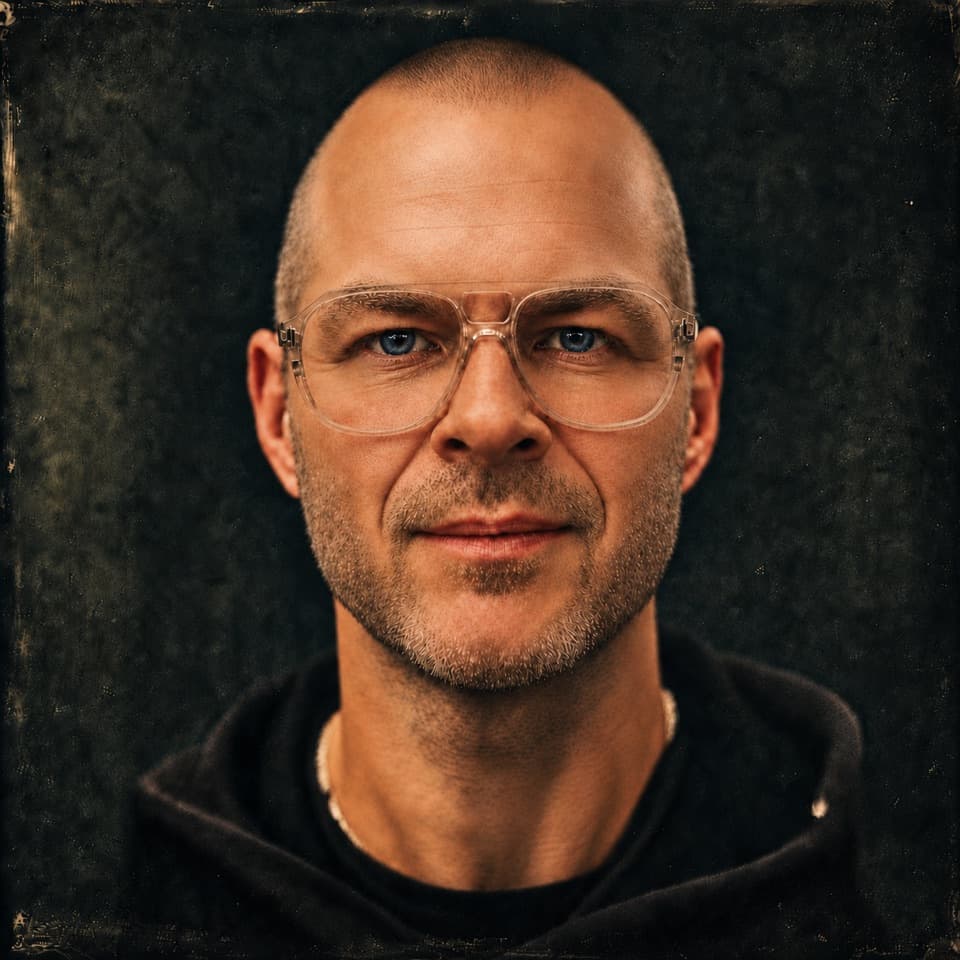
This reminded me of my buddy, Scott Barker. He’s also on a journey of tearing everything up to rebuild from the brain down. But his rebuild looks a bit different than Breezy's.
Scott
Breezy rebuilt herself to get back on the same mountain, but Scott realized he was on the wrong mountain entirely.
Scott co-founded a venture capital fund called GTMfund and spent four and a half years grinding to build it. Before that, Scott had worked building the #1 podcast focused on sales engagement, SalesHacker, and then turned that into several key leadership roles at Outreach. He went fifteen years of going non-stop, pushing for the next milestone. And as soon as he'd hit one, he'd move the goalpost.
During those years building the fund, Scott looked like the picture of success. But his personal life was falling apart at the seams. He proposed to his girlfriend, but their engagement fell through. His grandfather died. He ended up in the emergency room in Italy with an ulcer. He coped with alcohol. And he eventually endured weekly panic attacks.
As his personal life deteriorated, he couldn’t process any of it. Work was his sole priority. He signed off every email with “#50MOD,” meaning “50 Million Or Die” (the fundraising target), and he meant it quite literally.
Scott realized something had to change. But he couldn’t stop working. So, he hired a therapist, a performance coach, and a spiritual advisor. All three at the same time, just to keep the train on the tracks. But he was trying to heal with the same intensity he applied to everything else. That kept him in the game for a little while, but it didn't actually fix anything.
Eventually, the train came off the tracks entirely when he stopped sleeping. He was down to just two or three hours a night, and he barely recognized himself in the mirror. So he finally hit pause, took a leave of absence from the fund, and gave himself space for the first time in his adult life.
That's when he realized he had no idea who he was if he wasn't achieving things. Achievement had become his whole identity. And that identity had made him miserable. The life he had dreamed of for so long felt empty and meaningless.
So Scott left his job, sold everything he owned, and headed East to learn something about himself that fifteen years of winning never taught him. He writes about this in his newsletter, The Wake Up Call.
When Scott shared his full story with me, I read it out loud to Jennifer. I had to stop a few times because I got emotional. Not because it was sad.
Because I recognized more of myself in Scott’s story than I was comfortable with. The relentless pushing, the moving goalposts, the identity wrapped up in achievement. I'm not in Scott's situation, and I love what I do, but reading his words was like looking in a mirror and not loving everything I saw.
Different paths for different people
Most people hear these two stories and figure out pretty quickly which one they relate to. You're either Breezy, rebuilding to come back stronger at the same game. Or you're Scott, rebuilding because you realize that you want to play a different game entirely.
But there's a third version that I think most people don't consider. You start rebuilding, thinking you're Breezy, planning to come back to the same game stronger than ever. But somewhere in the process, you realize you're actually Scott. The rebuild reveals that the mountain you've been climbing isn't actually your mountain at all.
It doesn't matter which version you are. At some point, most of us need to be rearchitected from the ground up to keep moving forward. Some of us will come back to the same race. Some of us will find a new one. And some of us won't know which one we are until we're already in the middle of it.
The bottom line
Breezy won Gold on the same mountain where her career nearly ended. And Scott walked away from a mountain he'd been climbing for fifteen years. Both of them are better for it.
So here's the questions I’d love for you to consider this week:
If you’re confident you’re on the right mountain, do you have the right plan in place, brain-down, to keep going successfully?
Or do you need to accept that the mountain you’re flying down isn’t the right mountain for you at all?
Reply and tell us. While we can't reply to everyone, Jennifer and I read every response, and we love hearing from you.
That's all for this week.
See you next Saturday.