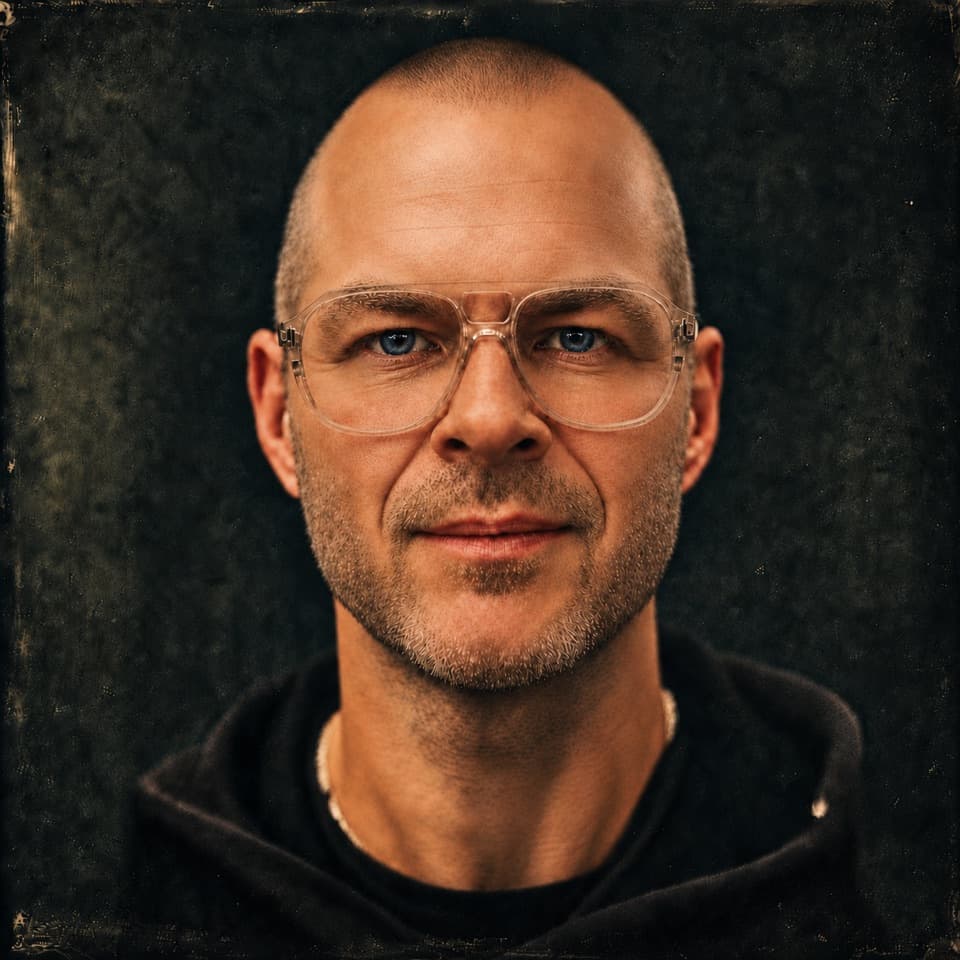
Everything I’ve learned growing from zero to 800,000+ followers and over $12M in profit on LinkedIn since late 2018.
On December 9th, 2018, I got my first 1,007 impressions posting on LinkedIn. Since that date, my LinkedIn content has been seen 472,900,000+ times, received 7.1M reactions, nearly 2M comments, and been reposted almost 219,000 times.
That type of top-of-funnel production has led to over $12M in profit at 90% margins over the last six years, and I’ve been named Favikon's #1 Global LinkedIn Thought Leader 5x.
So, it’s fair to say that I’ve spent my time decoding this platform. Many people have reached out to ask how I approach LinkedIn and how I use this platform.
This guide is my answer. Everything I've learned about growing on LinkedIn, broken into practical steps you can start using today.
Let’s dive in.
Part 1: Get Your Head Right
Focus on Intentionality, Not Virality
LinkedIn is full of AI-generated content and generic advice. While scrolling, you'll see countless people sharing everything from tear-jerking stories to risque selfies, to platitudes and rehashed advice…all looking for quick wins.
Don't be them.
Chasing “viral” content without laying a solid foundation won't do you any good if you’re trying to become a respected thought leader or business owner.
Want longer-term, predictable, sustainable growth? I suggest a different approach:
- Be the person who's known for something specific
- Have a “spiky point of view” on that thing
- Connect with the right people
- Focus on leads, not likes
Check Your Mindset
Worried about low engagement? Who cares. You’re about to embark on a journey that will (hopefully) span years. You’re going to get low engagement, average engagement, and high engagement at some point in time. You’re also probably going to write stuff that absolutely nobody cares about. Or something you even get made fun of for.
That’s all part of the game. Today is a great day to thicken up your skin and start learning how to publish your thoughts on the internet on a regular basis.
You can't hit home runs without a lot of swings, so work on getting your mindset right first, before you get started.
Keep Your Reader in Mind
The harsh truth is, online, nobody cares about you. They only care about how you can help them.
Before you push out any content moving forward, I want you to write a little post-it note and stick it on your monitor that asks these 3 questions:
- Does this teach the reader something specific related to my expertise?
- Does this post have a “spiky point of view” that is unique to me?
- Is this easy to read, understand, and take action on?
If the answer to all 3 is "no," I want you to always go back to the drawing board.
More on “spiky points of view” and content creation later. Before we start with that, let’s get you set up for success with your profile.
Part 2: Optimize Your Profile
I want you to think like a marketer when you're building out your profile page. Your profile is essentially a sales page or landing page that should answer one simple question:
Why should I follow this person?
Here's the journey someone goes on when they decide to follow you:
- Sees a carousel or post in the feed
- Clicks on your profile
- Reads your banner image
- Reads your tagline
- Checks out your About section
- Scans your Featured Section
- Follows you or doesn't
I want you to make sure you’re optimized for each of these moments.
Optimize for Search
215M people, potential customers, and recruiters use LinkedIn's search function every day.
Sadly, so many people remain completely hidden in obscurity. Why? Their LinkedIn profiles aren't optimized for searches.
Make sure, as you fill out your About section, Headline, and other areas of your profile, that you’re sprinkling in relevant keywords. What words would someone type into the search bar if they were looking to hire someone with your expertise? Integrate them into your headline, summary, work experiences, and recommendations.
Get a Professional Headshot
Before anyone reads your well-optimized profile or jumps into your accomplishments, they'll see your headshot. Whether you like it or not, in a matter of seconds, they'll form a first impression.
Your headshot is more than just a photo. It's a huge part of your personal brand. It communicates a feeling: confident, powerful, fun, helpful, playful, relaxed, etc.
You don't need to go find the most expensive photographer in your town, and you don't need to suit up for a board meeting (unless that’s the vibe you want). What's essential is authenticity, relatability, and a vibe that works well with your online persona.
Ditch those vacation photos or the ones with cropped-out friends. Make sure your face is clearly visible, with even lighting and a neutral or professional background.
I recommend making it confident, professional, and inviting.
Get Your Headline Right
Your headshot draws people in. Your headline hooks them by telling them exactly what you do, who you help, and how.
A common mistake I see is that people are often way too generic. "Graphic Designer" or "Marketing Pro" might describe what you do, but it doesn't tell the whole story.
LinkedIn has a million graphic designers and marketing professionals. What makes you different? Who do you serve? WHY YOU?
Instead of being another "graphic designer," try: "Graphic designer specializing in brand identity for tech startups. Designed for four $100M businesses."
Rather than "marketing professional," try: "B2B marketer helping early-stage healthcare companies generate $50M in annual pipeline (that converts!)"
Your headline shouldn't be just a title. It should be a succinct value proposition. Specificity and “selling yourself” win big.
Make Your Featured Section a Lead Capture
On LinkedIn, the Featured section is where you’re going to show off your work. It's prime real estate to guide your audience toward some sort of meaningful action.
I've seen too many profiles where this section is just an assortment of top-performing posts. But this isn't the space to show more of what people can already see on LinkedIn.
Make purposeful choices. What do you want your audience to do after viewing your profile? Sign up for your email list? Buy your course? Book a consultation? Pinpoint these calls to action and make them your primary focus.
Use on-brand images and choose a maximum of two featured items, so that one isn’t half-on and half-off of your profile. I recommend something for free (join my email list) for those who aren’t ready to commit to something more, and one for paid (1:1 call, workshop, product, service) for those who are.
Pro tip: Skip the descriptions. It might feel counterintuitive, but you want to reduce friction. Without a description, your audience can click on a featured item and engage with it right away. They won't have to click on "view more" to get to the final destination.
Part 3: Design for the Visual Feed
In 2019, text was king. But in 2026, visuals dominate the feed.
The days of "Creator Mode" being a special setting are gone. Now, everyone is a creator, and the bar is higher.
If you aren't using carousels, infographics, or visuals, you’re basically invisible.
Visuals increase dwell time (how long someone looks at your post), which is the #1 signal to the LinkedIn algorithm that your content is good.
Don't just write text. Design an experience.
The Visual Formats That Work
- Carousels (PDFs): The highest performing format for educational content
- Infographics: Ideal for simplifying complex data
- 4x5 Visuals: Easy to consume, great for stopping the scroll
Part 4: Create Content That Performs
Find Your Niche
This is a part that trips a lot of people up. When you decide what you’re going to talk about, start with whatever you have expertise in, but find a way to be unique and to find what I call a “sub-niche.” For example, let’s say you’re a fitness coach (niche). Well, there are a million fitness coaches on LinkedIn. Why should someone pay attention to you?
Often, you can find that answer by getting a bit more specific. For example, underneath the broad topic of fitness, perhaps you have a deeper knowledge of CrossFit and its impact on the modern athlete.
Start there. Get good results by producing content every day that shows how modern athletes are leveraging CrossFit to get better at their sport. This is just where you’ll start, and going small allows you to ultimately expand later.
Create Something Every Day
Produce daily. Even if it's something small, put your thoughts out there into the world each day. It's the attention economy, and self-promotion wins.
I call this playing "Moneyball." Small, consistent actions that compound over time.
Systematize Your Writing with The Content Matrix
If you want to create content quickly and easily, you need a process.
I've been writing every day for years, and I struggle just like any other person. The difference? I have a system. It's called "The Content Matrix."
Here's how it works:
- I chose my mantra: What do I believe related to my sub-niche?
- Pillars: What topical areas will I be talking about on a regular basis?
- Core concepts: What strong opinions do I have about those pillars?
For example, using the fitness coach from above, it might look a little something like this:
- Mantra: Modern athletes cannot reach their peak performance without a CrossFit routine.
- Pillars: Specific exercises, form, strength, supplements, nutrition, rest, movement, etc.
- Core concepts (Using strength as an example): Most CrossFit coaches will tell you it’s all about strength, but they’re wrong. It’s all about max reps + form.
By having several pillars and core concepts, you’ll always have something interesting to say that’s on brand. Then, you’ll match those up with different content styles.
Any core topic can create at least 5 different posts:
- Teaching Post: Break down a process step-by-step
- Observation Post: Share what most people get wrong
- Prediction Post: Show where things are heading
- Comparison Post: Compare different approaches
- Teardown Post: Analyze real examples
- Listicle Post: Share a list of something
- Contrarian Post: What do you believe that most people don’t?
Feel free to steal a copy of mine here.
Write for the "...More"
One of the significant differences between LinkedIn and other platforms is how content appears in your feed.
LinkedIn has a 3,000-character limit, but only about 210 of those characters appear "above the fold." That's what people see before they decide whether to click "see more" or keep scrolling.
Your entire job with those 210 characters? Get them to click "...more."
Here's where it gets tricky: how you format those characters matters.
If you use line breaks between every line (for that punchy, spaced-out look like you see above), you're really only getting about 2 written lines before "see more" appears.
If you write without line breaks, you can fit more text, but it's denser and harder to read on mobile.
The tradeoff:
- More white space = easier to read, but less room to work with
- Less white space = more words, but can feel like a wall of text
There's no single right answer. Experiment. Post both ways. See what works for your audience and your style. But you need to understand the constraint you're working within.
Whatever format you choose, every line must earn the next line. The first line should break the scroll. The second line should build on it or create tension. The last line before "see more" (the hook line) should promise a payoff worth clicking for.
The Anatomy of a High-Performing Post
Every post I write has three parts: the Trailer, the Meat, the CTA/CTC, and a visual.
Part 1: The Trailer
The trailer is everything above "...more." It has 2 jobs: break the scroll pattern with the first line, and make the hook line compelling enough to click the "...more" button. It's where readers commit to reading more or continuing their scroll. It absolutely must be intriguing.
Part 2: The Meat
This is the largest part of your post where you're teaching, showing, or suggesting something. It's the information the reader is looking to consume and that you're attempting to convey.
I like to write this first, because it’s easier to get the information out before deciding how to “hook” people on it. Once you’ve written that, the next thing we want to do is get people to click "...more.” Let’s do that next.
Part 3: The CTC or CTA
My goal in the end is to ask the reader to do something. Sometimes, it’s to leave a comment and participate in the conversation (a CTC – call to conversation). Other times it’s to take a meaningful action like sign up for my newsletter or buy one of my products (a CTA – call to action).
Part 4: The Visual
If you really want to stand out on the LinkedIn timeline, a compelling visual that supports your post is a huge benefit. You can create one on Canva, use AI to design one, have someone create one for you, or find one you like online (as long as you credit the original creator).
Learn to Write Great Copy
If you really want people to read what you write, learn to write great copy.
The people who write the best copy online aren't just winging it. They've read and practiced. Put in your reps. I’d highly recommend studying other big-time creators, and reading a few classic books on copywriting.
Here are a few of my favorites:
- The Adweek Copywriting Handbook by Joseph Sugarman
- Scientific Advertising by Claude Hopkins
- Ogilvy on Adverstising by David Ogilvy
I’d also recommend learning about what’s called a “spiky point of view.”
My friend Wes Kao gives it the best definition, IMO:
You can read the full thread here.
Part 5: Accelerate Your Growth
Draft Off Giants (Strategic Commenting)
Engagement isn't just about replying to people on your posts. It's about showing up where the biggest party is.
Here's the strategy:
- Identify 10 "Giants" (large accounts with massive reach)
- Find out when they post (I post daily at 7:50 AM EST)
- Respond immediately when they post and leave a "Top Voice"-style comment
Don't: "Thanks for sharing!"
Do: Share a unique point of view, add perspective, or respectfully disagree with a counterpoint.
If you land a top comment on a post with 100k views, thousands of those people will click your profile. This is how you gain massive visibility without having a massive audience yourself.
The 7:50 AM Strategy
Follow me. Write a comment in the first 15 minutes of my post going live. I'll interact with you in that time window.
You'll get thousands of impressions on your comment and profile. If you end up being the top comment, you might get over 100,000 impressions. So leave something smart.
Make sure you have the notification alerts turned on for my posts each morning at 7:50a EST. You can turn them on easily by clicking the bell 1x. It should say, "You'll now receive notifications for all new posts from Justin."
Build Meaningful Relationships
Early on, it's all about building relationships. If people DM you asking about your content, write back.
I spend 45 minutes each morning from 7:45 a.m. EST until 8:30 a.m. EST responding to nearly 75% of the comments I get on my content.
Connect with Other Thought Leaders
Once you begin to get some decent engagement, reach out to relevant people and form real, actual relationships with them.
Don't be transactional.
Instead, get to know them like you might a friend in real life. Jump on a call. Help them out. One of my favorite tactics is to read content from people that I want to get to know until they mention a topic that’s relevant to my area of expertise. Then, I’ll often find an article I love (or has been useful to me) and send them a DM sharing it.
I DO NOT ask them to “jump on a call” or let me “pick their brain.” I simply share it, tell them why I shared it, why it benefited me, and why I thought it might be useful to them. That’s it.
Build a "Growth Circle"
Don't go at LinkedIn completely alone.
Find 3-5 other friends or creators who are at a similar stage in their journey and start a group chat.
This isn't about gaming the algorithm with fake engagement. It's about genuine accountability and what I call “starter engagement.” Nothing is worse than getting zero likes on a post, but with 3-5 friends, you know you’ll at least get something small. And with their help, it will get pushed out to more people on LinkedIn and give you a better chance to have some success.
This group is also a place where you can share your drafts, give feedback on headlines, and push each other to hit "publish" when you're scared.
When you have a small tribe supporting your content, you gain early momentum that signals to LinkedIn that your post is worth distributing.
Help Others (Without Asking Permission)
Don't ask for permission to help others. Just do it.
If you want to start interacting more meaningfully with large accounts, take some of their work and turn it into infographics or carousel posts. Write up a breakdown of your favorite creator, design a visual for it, post it, and tag them.
It gets attention, drives engagement, and helps them get more eyeballs.
Be a Thought Leader
Success on LinkedIn isn't just about joining the comments section of other people’s posts, though. It's also about starting them.
And let's be real: regurgitating mainstream stuff rarely creates a mark for your brand. On the other hand, contrarian takes, backed by personal insights, command massive attention.
True thought leadership pushes boundaries. It's not about simply regurgitating common wisdom but challenging it.
Ask uncomfortable questions. Dissect popular notions. Venture where few common posters dare to even tread.
Sure, echoing the crowd might get you nods. But presenting fresh, even rebellious perspectives? That's what builds lasting brands.
Go Deeper to Share More
As you get more experience in your particular niche, go deeper.
Write longer-form articles (Newsletters) that teach your audience or provide behind-the-scenes looks at how you're doing what you are doing. Show off your expertise and authority. Build trust. There is no better way to expand on a popular LinkedIn post than by writing a newsletter about it. If a post worked well…why wouldn’t a newsletter on the same topic?
Move People to Your Email
Once you have some good engagement, remember to stop renting and start owning.
Make simple, irresistible offers and get people onto your email list.
If LinkedIn changes its algorithm? Goodbye engagement. But your email list is yours forever.
Part 6: Show Up Consistently
If you think you're going to amass a huge LinkedIn following by sprinting for a month and then taking a breather for the next two, that's not how it works.
Building a presence on LinkedIn is like training for a marathon. You'll get bursts of energy here and there, but you can't count on it. You must keep engaging, learning, and growing, even on days when inspiration seems a bit elusive.
Find your rhythm. Create a content calendar that feels manageable, then stick to it. Consistency's compounding effect builds influence.
“Play the Hits”
One of my favorite pieces of advice that I give at Masterminds across the world is called “playing the hits.” Here’s what I mean:
Once you’ve been creating for several months or quarters, you’re going to start seeing what posts work and what don’t. Whenever a post works, create five different variations of it, and stagger them once per month over the next five months. Save every single post that works and every variation that works, too.
Over time, you’ll build a portfolio of top-performing posts. These are your “hits.” And the more you write and publish, the more hits you’ll have. Over time, your goal should be to get 90 hits, so that 25% of one year’s worth of content can be repurposed.
Don’t worry about boring your audience. There are lots of new people who will come across this and move of your audience will forget. Play the hits!
Ask People to Follow You
If you don't ask, you won't receive.
Many people mistakenly believe that just because they're sharing compelling content, followers will come pouring in. But people are busy. Your content might scream "expertise," but if you don't directly invite people into your world, they might just admire from a distance and scroll on.
Rally your friends, family, and colleagues. Let them know you're building on LinkedIn and would value their presence.
Already on other platforms? Announce your LinkedIn presence there.
Include your LinkedIn profile's link in your email signature.
Make it an invitation, not a demand.
The Bottom Line
Getting new followers on LinkedIn isn't about taking shortcuts. It's about building meaningful relationships and crafting a narrative that resonates.
LinkedIn's algorithm rewards clarity, consistency, and visual value.
Ready to take the leap? Go create that LinkedIn legacy.
I'm cheering you on.
P.S. If you like this guide and want to go even deeper on LinkedIn, social selling, creating products, and generating revenue for your online business, consider checking out my Masterclass called The Creator MBA. It’s a complete behind-the-scenes look at how I build an online business (and market it on social media) from scratch to over seven figures.